
Reconstruct Hale County Former Owners Transfer by Transfer
Treat the chain as a dated worksheet. The top row is the newest deed, and every row beneath follows that deed's grantor back to an earlier acquisition.
| Source | Years It Covers | Where Held | What It Shows |
|---|---|---|---|
| Hale land-record index | Online start year not officially stated | Hale Online Services and Probate Judge | Grantor, grantee, instrument, book/page, date |
| Physical deed books and indexes | Older and non-digital series | Probate Judge Records Office | Recorded conveyances and cross-references |
| County Records on Microfilm | Series varies; confirm the Hale catalog entry | Alabama Archives | Research images and index leads |
| Alabama state land records | Statehood through 1950 | Secretary of State | Name, township-range-section, and book leads |
Start online for a recent chain. Just avoid inventing a cutoff year, because older deeds still count. When a web result stops or a book series is unclear, call 334-624-8740 and the recorder's staff can point you to the right volume.
Reverse Hale's Grantor and Grantee Roles
The county-linked Hale Online Services system supports name, date, and book/page searches. It also covers party roles, instrument filters, and cross-references. Search the current holder as grantee, open the acquisition deed, then chase its grantor as a grantee in earlier years.
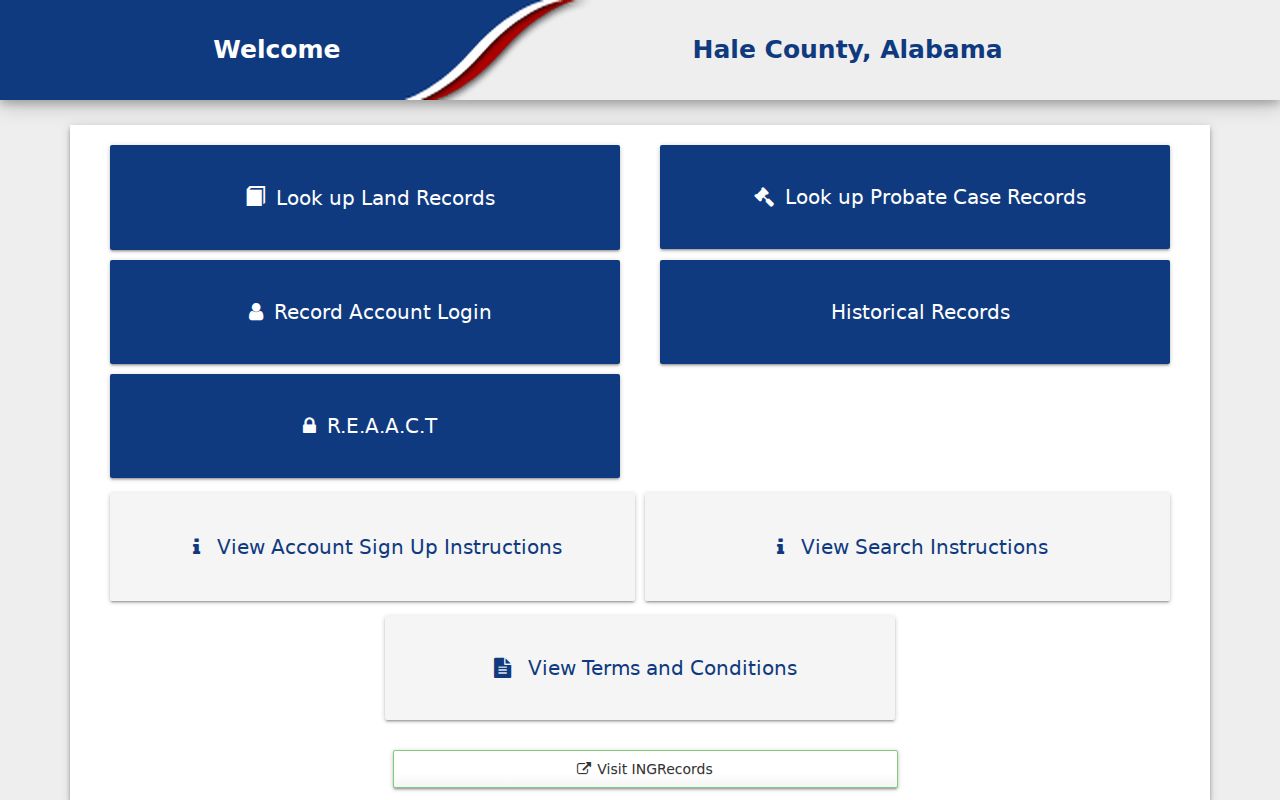
The portal is only the doorway. Each prior owner still needs support from the indexed conveyance and its legal description. Names shift across the decades. Test initials, married names, spouses, estates, trusts, company punctuation, and spelling variants, since a deed image can reveal legal descriptions, reservations, consideration, and exhibits the index row omits.
Stop Hale Ownership History at a Plat or Parent Tract
A lot deed can point to a parent tract rather than an identical parcel. Pull the plat first. Then read the plat's lot dimensions, roads, easements, dedications, and revisions. Countyline Subdivision, Map Book 2 page 38-A, shows up in both Greensboro and Akron mailing contexts. A city label alone joins nothing without matching parcel and legal text.
Walk the Hale County Deed Chain Backward
Anchor the work in the current GIS or CAMA parcel. The deed language, though, controls every historical link in the ownership chain.
- Copy the current parcel's full legal description and newest deed citation.
- Open the deed into the current grantee and record the grantor, dates, deed type, and prior citation.
- Search that grantor as an earlier grantee and retrieve the acquisition deed.
- Repeat while resolving each plat, parent tract, estate, correction, and court-order break.
- Continue through books, microfilm, and state lands when online access ends.
- Grantor / grantee
- The conveying and receiving parties.
- Chain of title
- The linked sequence of recorded transfers.
- Reverse index
- An index arranged by grantee.
- Legal description
- The durable land identifier when street labels change.
The 1935 Hale Courthouse Fire Raises a Records Question
Hale County's courthouse top floor burned on March 4, 1935, yet historical accounts report that most records sat in fireproof vaults or had been removed. Survival is not the same as completeness. Ask which specific series made it, and whether anything was restored, copied, or microfilmed. The ADAH county microfilm catalog offers a second route. Originals usually stay with the creating office.
Bridge Hale Estate Transfers Without Guessing Heirs
Search the probate case and land index for the decedent, the estate, the executor or administrator, any beneficiaries, and the eventual distribution or executor deed. A death certificate supports identity research under Alabama access limits. It does not transfer real estate or prove an heir.
The Comptroller forms index lists a current small-estate update under Act 2025-431. Use the live form rather than repeating an old valuation threshold. Then match any probate authority to the recorded parcel instrument.
Keep a Hale Former-Owners Evidence Log
For each transfer, write down the source URL or physical volume. Also note party terms, role filter, instrument type, execution and recording dates, book and page, legal-description phrase, and image pages. This log reveals gaps that a polished family tree can hide.
Dates from different systems serve different purposes. Execution, acknowledgment, recording, probate, court-order, assessment-year, and GIS-update dates may all differ. Use them to order the work. But do not treat a later screen date as automatic priority. If a deed cites a parent tract, retrieve that prior deed before stepping farther back.
Partial transfers need extra care. Compare acreage, lot and block, section-township-range, roads, creeks, and reserved interests. A parent parcel's whole GIS polygon did not necessarily move. That can happen when a deed conveyed only one tract or an undivided share. Search later splits, combines, corrections, releases, and replats.
For microfilm, write down county, record type, reel or volume, page, and image number. Ask ADAH whether its copy suits research and whether certification must come from Hale. If the historic index is unclear, search direct and reverse indexes separately. Then ask Probate staff about the series rather than inventing continuity.
This method also limits false matches among previous owners who share a surname. Middle initials, spouses, entity names, legal text, and adjoining owners can distinguish records. Only a consistent parcel description joins them into the same backward chain.
Choose the Right Hale Copy for the Ownership History
A portal image may be enough for preliminary former-owner research in Hale County. Certification is a different question. Before ordering, ask the Probate Judge whether a download is certified, whether every attachment appears, and what seal, page set, and fee apply.
For a formal filing or transaction, give the office the book/page, instrument type, parties, and recording date. For history, ADAH microfilm can locate the passage. The originating office may still be the proper source for a certified copy. Keep receipts and download status in the evidence log.
Alabama Code §36-12-40 supports citizen inspection and copying of public writings, subject to exemptions. No Hale-wide form or fixed deadline applies. Name the record you want. A narrow request for a named index, deed book, plat, or instrument is easier for the custodian to identify than a demand for every record tied to a person. That precision speeds the response.
How Far Back Hale County Ownership Records Go
The Probate Judge's books hold the older former owners, along with Secretary of State land records through 1950 and ADAH microfilm. Note county, series, reel or volume, page, and image so another researcher can reproduce the link.
Research chain, not title opinion. Prior-owner work supports house history and property diligence, but it may miss unrecorded, misindexed, reserved, or disputed interests.
Use these property records lawfully. Never deploy them to track or harass a living person. For a formal transaction or a boundary dispute, order the certified copies the county requires and get qualified title advice before you act.